The Perfect Storm 2026
How are the teenagers of Ireland really doing, and does it look different for girls and boys?

At The Shona Project, we've spent a decade listening to girls. This year, for the first time, we placed their experiences alongside boys', asking what the two accounts reveal when read together.
The Perfect Storm 2026 was a survey conducted in partnership with RED C Research and funded by The Irish Youth Foundation, gathering 802 responses from secondary school students aged 12–19 across Ireland, including 502 girls, 280 boys, 8 young people who identified as non-binary, 4 who identified as another gender identity, and 8 who preferred not to disclose their gender. Eight in-depth interviews added further depth to the findings.
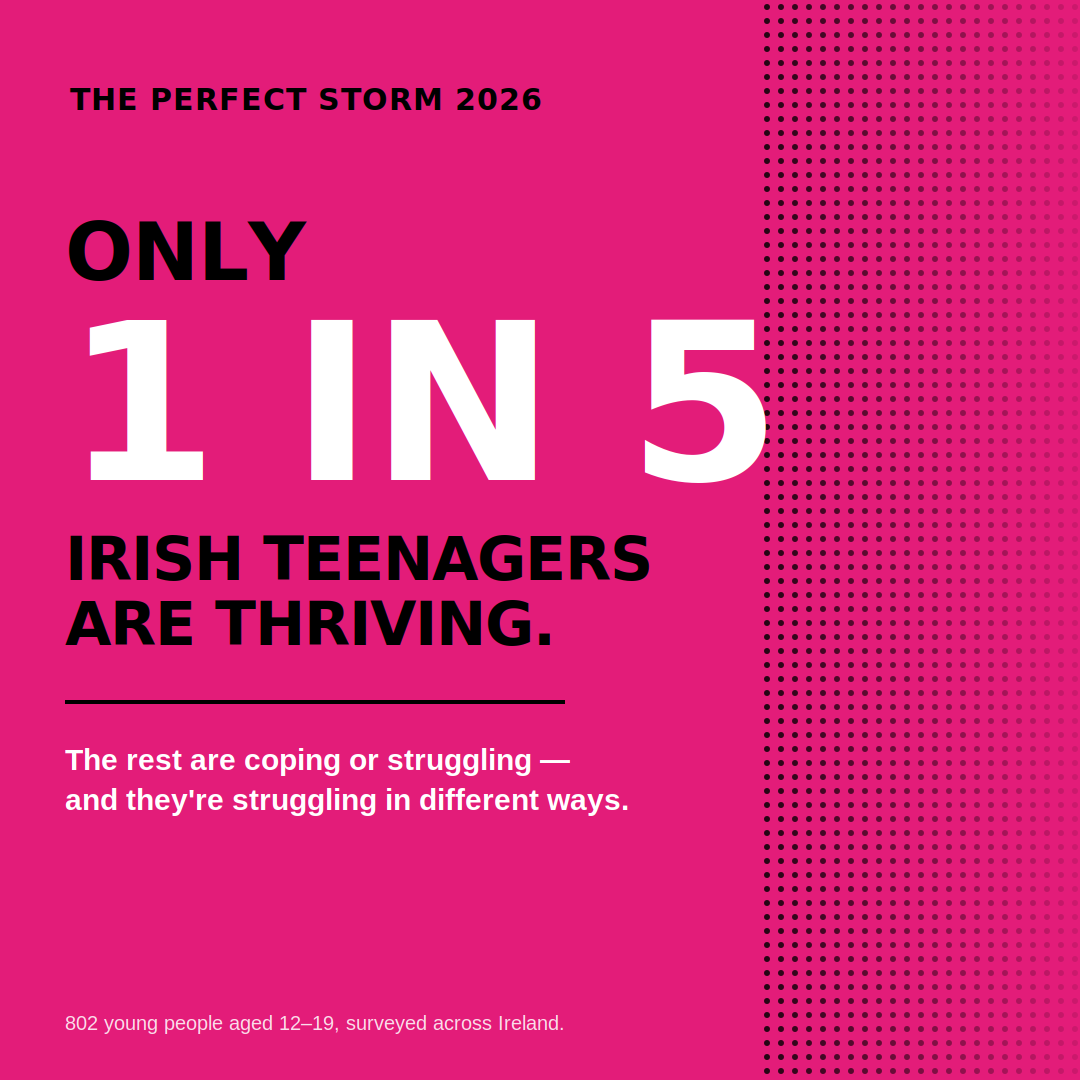
The rest are coping or struggling, and they're struggling in different ways.
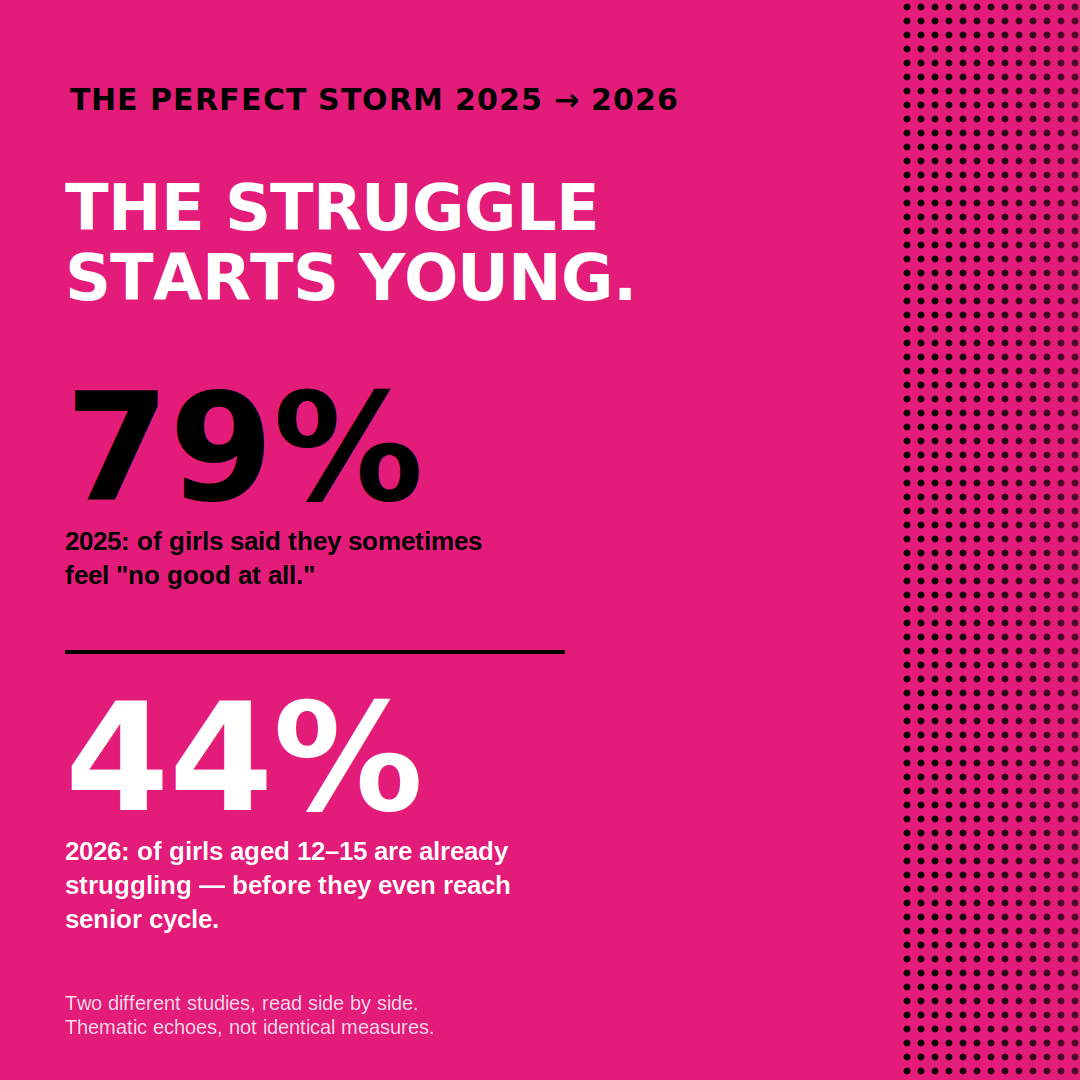
Girls' difficulties tend to be visible and start early.
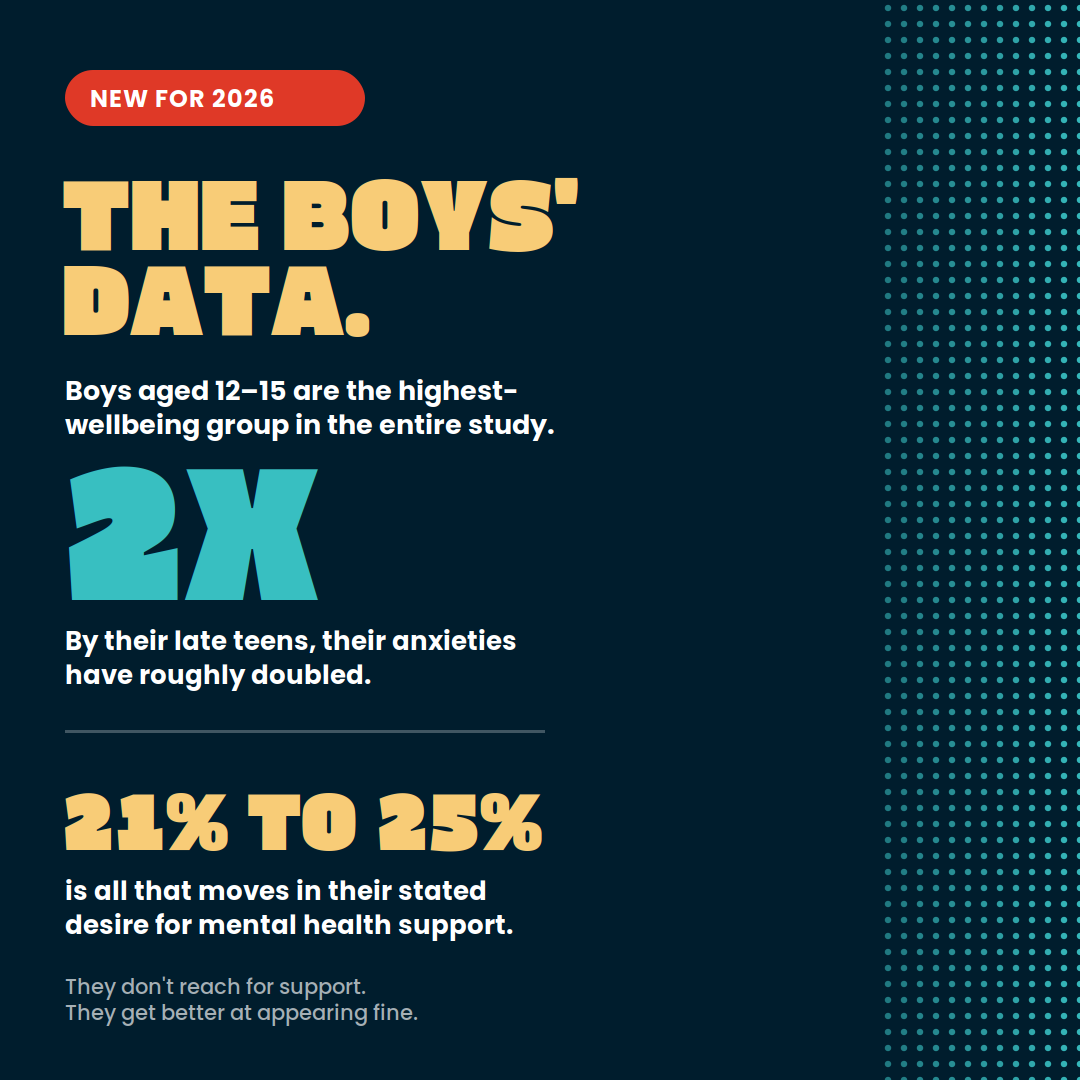
Boys' difficulties arrive later and stay hidden; the youngest boys in the study are the highest-wellbeing group of all, but as the scaffolding of sport, structure and belonging fades through adolescence, boys don't reach for support. They get better at appearing fine.
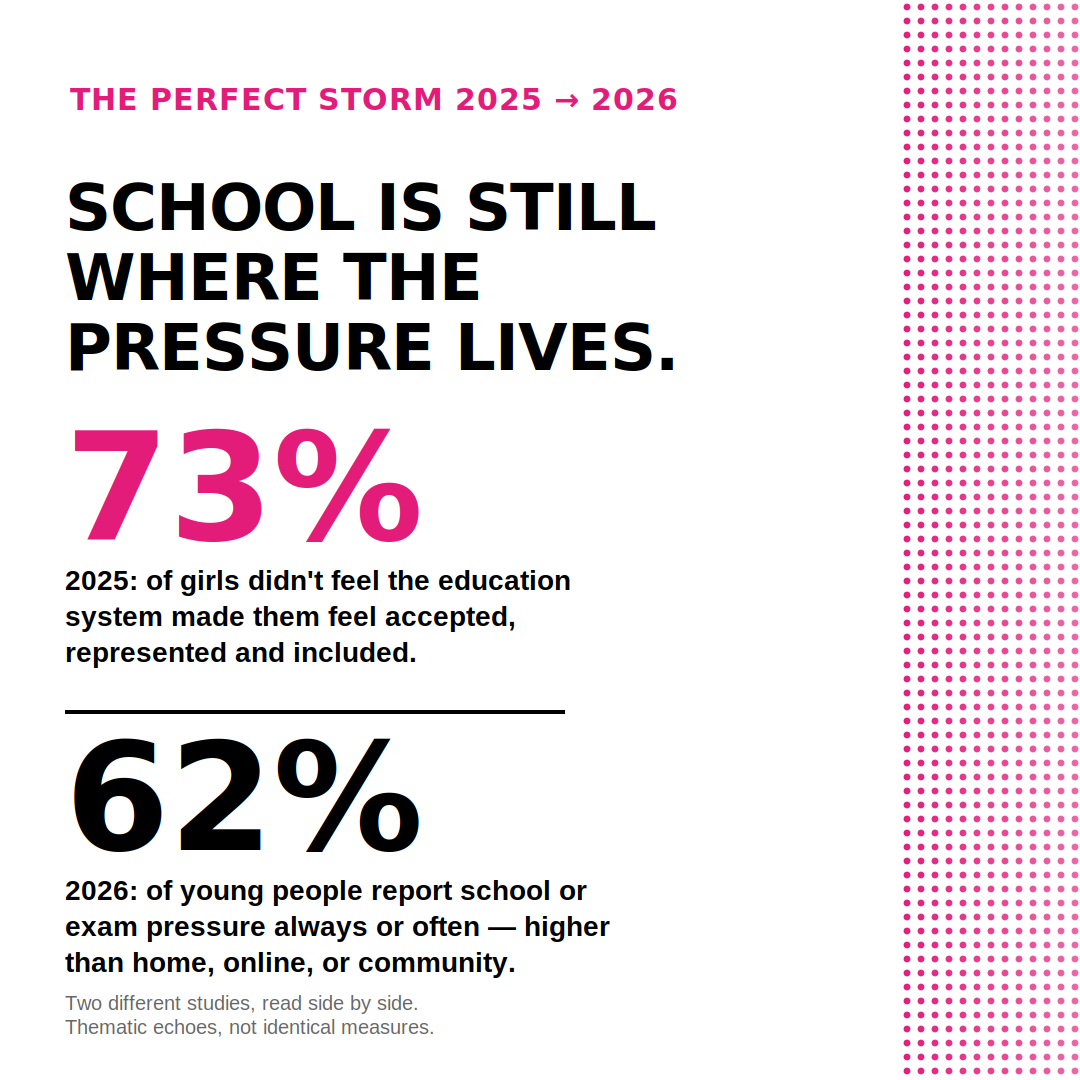
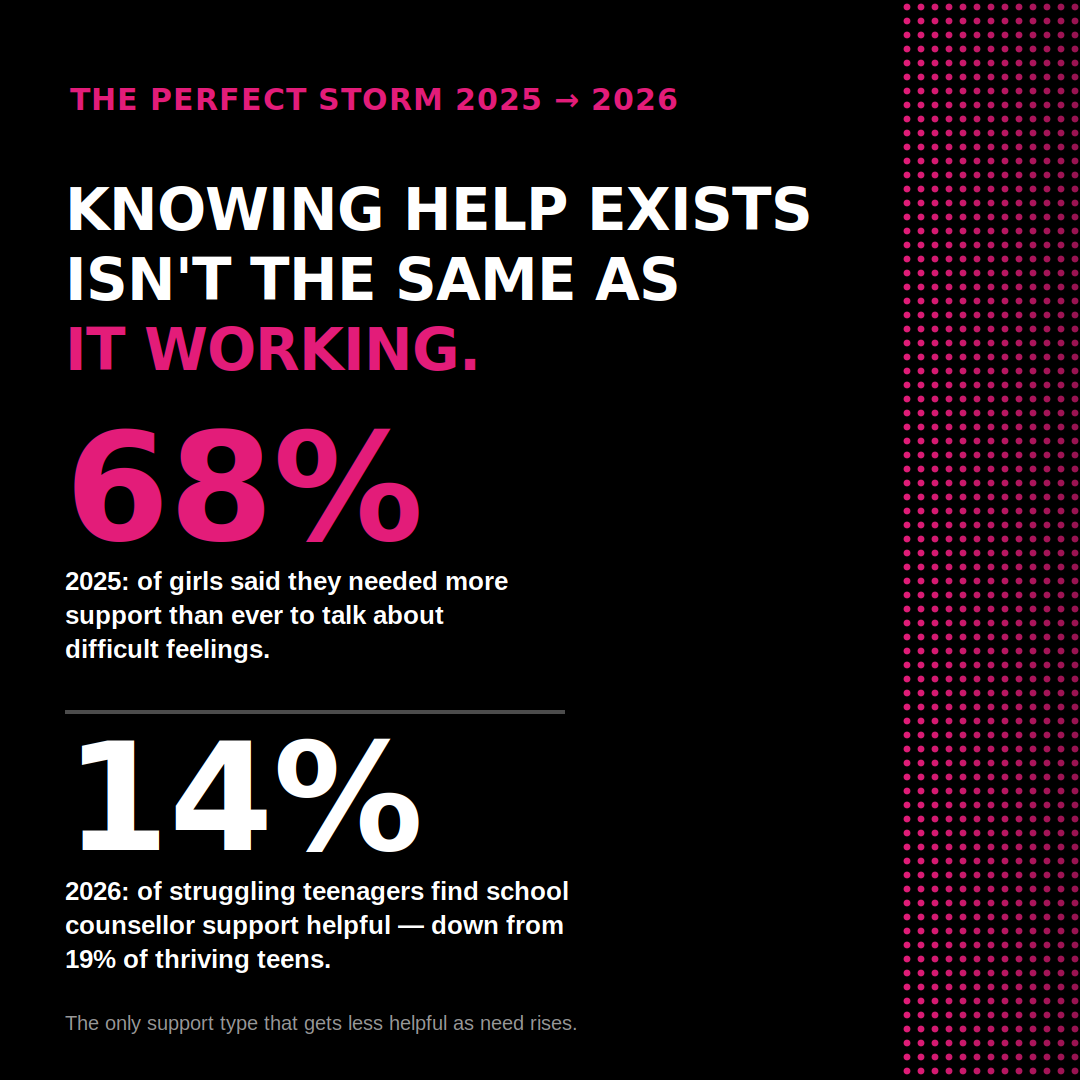
BY THE NUMBERS: 2025 vs. 2026
Two different studies, read side by side. Question wording and scales differ year to year, so these are thematic echoes, not identical measures.
This isn't a story about a minority of vulnerable young people slipping through the cracks. It's a story about what's happening to most young people in Ireland as they move through secondary school, and about a system built for a one-size-fits-all approach that fits neither girls nor boys well.
Over the past year, The Shona Project has been piloting a new programme for boys and young men, Mark, rooted in the same values that have guided our work with girls for a decade. This research confirms both the need and the direction.