
The Anxiety Suite
What Is The Anxiety Suite?
86% of girls in Ireland report that they sometimes feel low, anxious or stressed or that their mental health is not good. We get it! That's why we want to have open and honest conversations with people who have experienced this in their own lives. This is why we have created our Anxiety Suite with Molly Erin Hayes and Tara Rafter, with support from our friends at VHI.
Supported by:


Episode 1:
Anxiety 101: When Molly Met Tara
In episode 1, we meet Molly and Tara and talk about their own experiences with anxiety. We learn about the difference between stress and anxiety, when to seek help, how anxiety manifests itself in our bodies and how we can learn to live with anxiety, rather than fighting it.
This is a beautifully authentic conversation, and we hope you feel as though this is a safe space so you can know that you are never alone.
-
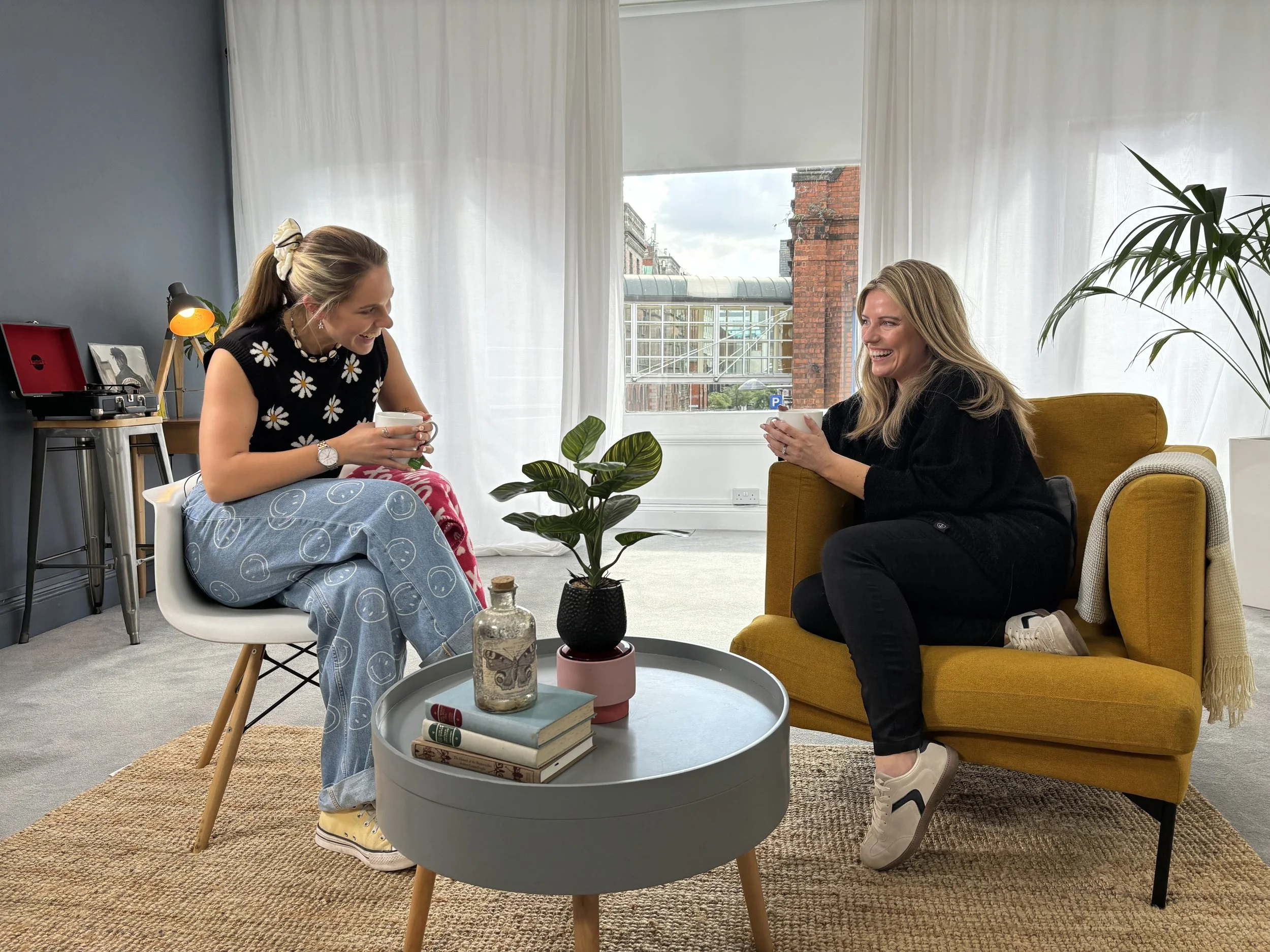
Molly and Tara have the opportunity to sit and chat about their own life experiences and learnings with stress and anxiety in the hope of opening up some honest conversations on these subjects.
The more we normalise and familiarise ourselves with topics like this the easier the communication becomes.
Just so you know, this conversation is not a substitute for seeing your GP or mental health professional.
Please speak to a trusted adult if you need any support.
-
Tara and Molly speak about their mental health glam squad.
As a class group, can you list 10 different groups of people in your lives that could form part of a mental health glam squad?
-
In this conversation, Tara explains the "then what?" tool.
Think about something that has you feelling little overwhelmed lately, and break it down using the "then what?" tool.
Episode 1:
Anxiety 101: When Molly Met Tara
In episode 1, we meet Molly and Tara and talk about their own experiences with anxiety. We learn about the difference between stress and anxiety, when to seek help, how anxiety manifests itself in our bodies and how we can learn to live with anxiety, rather than fighting it.
This is a beautifully authentic conversation, and we hope you feel as though this is a safe space so you can know that you are never alone.
-
Molly and Tara have the opportunity to sit and chat about their own life experiences and learnings with stress and anxiety in the hope of opening up some honest conversations on these subjects.
The more we normalise and familiarise ourselves with topics like this the easier the communication becomes.
Just so you know, this conversation is not a substitute for seeing your GP or mental health professional.
Please speak to a trusted adult if you need any support.
-
Tara and Molly speak about their mental health glam squad.
As a class group, can you list 10 different groups of people in your lives that could form part of a mental health glam squad?
-
In this conversation, Tara explains the "then what?" tool.
Think about something that has you feelling little overwhelmed lately, and break it down using the "then what?" tool.
Are you a teacher and would like to use this as a resource in your class?
We have you covered! We have created ready-to-use lesson plans to support this video that align with the Junior Cycle Wellbeing Framework, the Junior Cycle curriculum, and the Bí Cineálta policy.
Episode 2:
“Why can’t I stop scrolling?” – Social Media and Anxiety
In episode 2, Molly and Tara look at why we are all falling for doom scrolling, why we are so obsessed with likes, and why social media makes us feel as though we are failing or not enough. You can keep up to date with Molly on Instagram or TikTok (@molllyerin) and Tara on Instagram or her website (@thenavigationcoach).
-
Molly and Tara have the opportunity to sit and chat about their own life experiences and learnings with stress and anxiety in the hope of opening up some honest conversations on these subjects.
The more we normalise and familiarise ourselves with topics like this the easier the communication becomes.
Just so you know, this conversation is not a substitute for seeing your GP or mental health professional.
Please speak to a trusted adult if you need any support.
-
There are plenty of reliable online sources you can use to fact-check the news you see on social media. As a group, how many of these can you identify?
-
Head over to your fave social media account, and hit the unfollow button on 3 accounts that don't bless your feed with positive vibes.
Are you a teacher and would like to use this as a resource in your class?
We have you covered! We have created ready-to-use lesson plans to support this video, which align with the Junior Cycle Wellbeing Framework, Junior Cycle curriculum and the Bí Cineálta policy.
Episode 3:
“Does everyone really hate me?” – Social anxiety
In episode 3, we tackle the big question that many of us have asked ourselves before... "does everyone hate me?". The simple answer is no, of course not, but Molly and Tara break down why social anxiety and our brains like to play tricks on us and how we reframe our thinking with wholesome and authentic conversations.
-
Molly and Tara have the opportunity to sit and chat about their own life experiences and learnings with stress and anxiety in the hope of opening up some honest conversations on these subjects.
The more we normalise and familiarise ourselves with topics like this the easier the communication becomes.
Just so you know, this conversation is not a substitute for seeing your GP or mental health professional.
Please speak to a trusted adult if you need any support.
-
Interacting with people in the wild can be scary - we get it! This class discussion is over to all of you social butterflies in the room.Can you share some of your favourite ways that you engage with others in-person, and tell us why this brings you so much joy? Here, you'll help your classmates plan more in-person conversations, which will help them build better connections, and show their brains that social interactions are safe, and not something to fear.Social anxiety who?!
-
You're going to set yourself a challenge for this week. Can you write down two people that you are going to have an in-person conversation with this week? This can be going into the takeaway instead of ordering a delivery, meeting your friend for a coffee instead of 462 voice notes, or even asking the person behind the till in the shop how their day is going! We believe in you.
Are you a teacher and would like to use this as a resource in your class?
We have you covered! We have created ready-to-use lesson plans to support this video that align with the Junior Cycle Wellbeing Framework, the Junior Cycle curriculum, and the Bí Cineálta policy.
Episode 4:
Panic Attacks Explained
In episode 4, things get real as Molly and Tara discuss panic attacks. To help us understand how to deal with them, Tara teaches us what is happening in our body when we experience one, what to do after a panic attack and how to help a friend who might deal with them regularly.
-
Molly and Tara have the opportunity to sit and chat about their own life experiences and learnings with stress and anxiety in the hope of opening up some honest conversations on these subjects.
The more we normalise and familiarise ourselves with topics like this the easier the communication becomes.
Just so you know, this conversation is not a substitute for seeing your GP or mental health professional.
Please speak to a trusted adult if you need any support.
-
Molly and Tara discuss triggers for panic attacks, and recognizing these triggers can be a significant step in reducing their frequency.As a group, can you share some potential triggers you might encounter? Then, help each other brainstorm logical ways to challenge and debunk those triggers.
-
Not everyone will experience panic attacks, but many of us will face moments of stress, overwhelm, or situational anxiety. Regardless of the situation, can you write down three things that you can do for yourself, once you've calmed down?
Are you a teacher and would like to use this as a resource in your class?
We have you covered! We have created ready-to-use lesson plans to support this video, which align with the Junior Cycle Wellbeing Framework, Junior Cycle curriculum and the Bí Cineálta policy.
Episode 5:
“I’ve Got This” – Building Your Anxiety Toolkit
In episode 5, Molly and Tara walk you through some super practical exercises to help you cope with situational anxiety, stress and overwhelm. From breathing techniques and journaling to the butterfly hug, you'll have plenty to try the next time you need a way to centre yourself.
-
Molly and Tara have the opportunity to sit and chat about their own life experiences and learnings with stress and anxiety in the hope of opening up some honest conversations on these subjects.
The more we normalise and familiarise ourselves with topics like this the easier the communication becomes.
Just so you know, this conversation is not a substitute for seeing your GP or mental health professional.
Please speak to a trusted adult if you need any support.
-
As a group, how many other coping techniques can you come up with for your own Anxiety Toolkit?
-
Take one of the techniques you have just learned from Molly and Tara and try it out for yourself.Give yourself space, get cosy and centre yourself. You've got this!
Are you a teacher and would like to use this as a resource in your class?
We have you covered! We have created ready-to-use lesson plans to support this video that align with the Junior Cycle Wellbeing Framework, the Junior Cycle curriculum, and the Bí Cineálta policy.
Episode 6:
Does Gratitude Really Work?” – Mindset Tips and Tricks
In episode 4, things get real as Molly and Tara discuss panic attacks. To help us understand how to deal with them, Tara teaches us what is happening in our body when we experience one, what to do after a panic attack and how to help a friend who might deal with them regularly.
-
Molly and Tara have the opportunity to sit and chat about their own life experiences and learnings with stress and anxiety in the hope of opening up some honest conversations on these subjects.
The more we normalise and familiarise ourselves with topics like this the easier the communication becomes.
Just so you know, this conversation is not a substitute for seeing your GP or mental health professional.
Please speak to a trusted adult if you need any support.
-
Spend time thinking about how your class could make your school community a more positive and grateful environment. Could you create a 'wall of thanks' or come up with other ideas on how to get everyone involved in moving into a more positive space?
-
Can you write down 3 specific things that happened today that you are grateful for? It can be the tiniest of things, but you've to try to get as specific as possible!
Meet Our Speakers